Germany is currently at the forefront of the shift from a “throw-away society” to a circular economy.
Here 3 inspiring examples:
🏙️ Tübingen was the first to implement a groundbreaking city-wide tax on single-use items (50c for food/drink containers, 20c cutlery). Despite a legal challenge from a major fast-food franchise (McDonald), Germany’s 𝐅𝐞𝐝𝐞𝐫𝐚𝐥 𝐂𝐨𝐧𝐬𝐭𝐢𝐭𝐮𝐭𝐢𝐨𝐧𝐚𝐥 𝐂𝐨𝐮𝐫𝐭 𝐮𝐩𝐡𝐞𝐥𝐝 𝐭𝐡𝐞 𝐭𝐚𝐱 as legally permissible. The city provided subsidies of up to €1,000 for businesses to install dishwashers and up to €500 to join existing reusable pool systems. As a result, this policy alone reportedly reduced public bin waste by 15% in its first month.
🍃 𝐅𝐫𝐞𝐢𝐛𝐮𝐫𝐠 long known as Germany’s “greenest city,” launched the FreiburgCup in 2016, a voluntary system where customers pay a €1 deposit and can return the cup to any of the 100+ participating cafés. Consequently, the city is now moving to the next level: as of 2026, Freiburg implements its own mandatory single-use packaging tax to match Tübingen’s rates, using the revenue to fund public waste management.
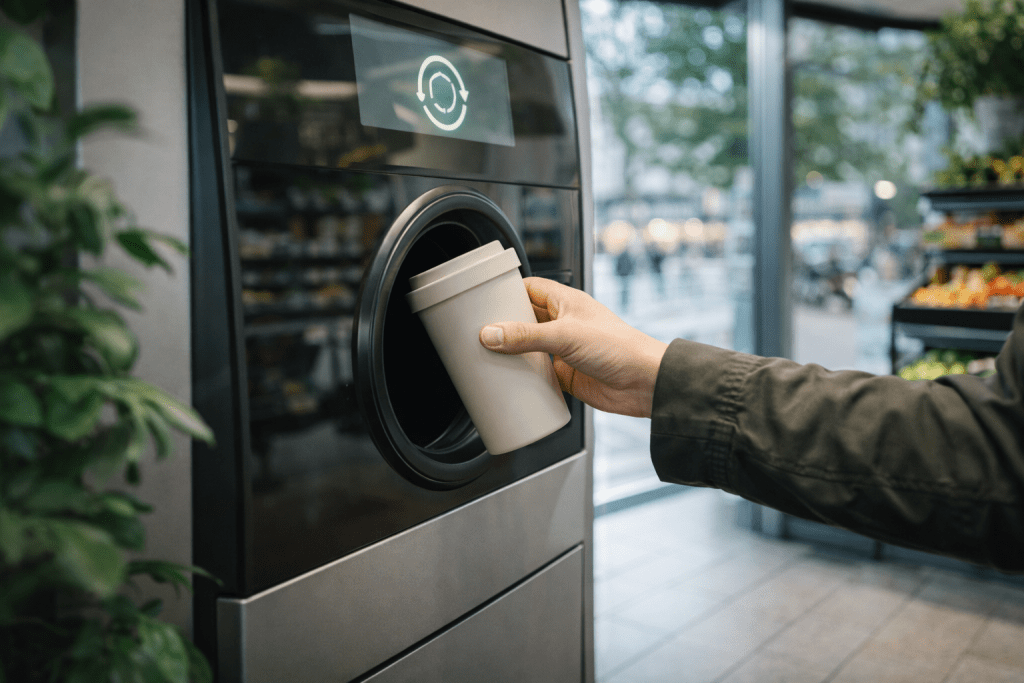
🛒 𝐁𝐞𝐫𝐥𝐢𝐧 implements the “ReuSe Vanguard Project” (RSVP), which aims to make returning a coffee cup as easy as returning a beer bottle. By connecting over 80 𝐜𝐚𝐟é𝐬 𝐰𝐢𝐭𝐡 𝐑𝐞𝐰𝐞 𝐬𝐮𝐩𝐞𝐫𝐦𝐚𝐫𝐤𝐞𝐭𝐬, customers can now return different brands of reusable cups (like RECUP and Sykell) via Reverse Vending Machines (RVMs). This system uses 𝐜𝐞𝐧𝐭𝐫𝐚𝐥𝐢𝐬𝐞𝐝 𝐢𝐧𝐝𝐮𝐬𝐭𝐫𝐢𝐚𝐥 𝐰𝐚𝐬𝐡𝐢𝐧𝐠 𝐚𝐧𝐝 𝐜𝐞𝐧𝐭𝐫𝐚𝐥 𝐭𝐫𝐚𝐜𝐤𝐢𝐧𝐠 𝐬𝐲𝐬𝐭𝐞𝐦. Early results show that 84% 𝐨𝐟 𝐜𝐮𝐬𝐭𝐨𝐦𝐞𝐫𝐬 are more willing to choose reuse when they can return items at the supermarket.
💡 3 𝐊𝐄𝐘 𝐓𝐀𝐊𝐄𝐀𝐖𝐀𝐘𝐒 𝐅𝐑𝐎𝐌 𝐓𝐇𝐄 𝐆𝐄𝐑𝐌𝐀𝐍 𝐌𝐎𝐃𝐄𝐋:
1️⃣ 𝐋𝐨𝐜𝐚𝐥 𝐚𝐮𝐭𝐡𝐨𝐫𝐢𝐭𝐢𝐞𝐬 𝐥𝐞𝐚𝐝𝐢𝐧𝐠 𝐛𝐲 𝐞𝐱𝐚𝐦𝐩𝐥𝐞: The courage of cities like Tübingen to be the first and stand strong for their decision has provided opened the doors for the rest of the country to act. Their ambition proves that local authorities can drive national change.
2️⃣ 𝐓𝐡𝐞 “𝐅𝐚𝐬𝐭 𝐅𝐨𝐥𝐥𝐨𝐰𝐞𝐫” 𝐀𝐜𝐜𝐞𝐥𝐞𝐫𝐚𝐭𝐞𝐬 𝐂𝐡𝐚𝐧𝐠𝐞: and currently, 𝐨𝐯𝐞𝐫 150 𝐆𝐞𝐫𝐦𝐚𝐧 𝐜𝐢𝐭𝐢𝐞𝐬 are planning or considering their own packaging taxes. And when pioneers prove a model works, fast followers turn a local experiment into a national standard.
3️⃣ 𝐂𝐨𝐧𝐯𝐞𝐧𝐢𝐞𝐧𝐜𝐞 + 𝐏𝐨𝐥𝐢𝐜𝐲 = 𝐒𝐮𝐜𝐜𝐞𝐬𝐬. Infrastructure like Berlin’s supermarket RVMs makes reuse competitive with single-use by fitting into existing daily routines of its inhabitants and leveraging an existing infrastructure.
If you want to read more about European cities, read our take on Aarhus, Denmark or Lisbon, Portugal.
At Circl’it, we bring you the right best practice to solidify your concept for reuse and then, we select the right packaging types and supply them as one cohesive, ready to deploy reusable packaging system, removing the hassle of managing multiple providers.
Sources: Zero Waste Europe studies, packaging Gateway, Packaging Journal, University of Maine study.