
Gli imballaggi riutilizzabili sono spesso presentati come un semplice scambio: sostituire gli imballaggi monouso con alternative riutilizzabili e la sostenibilità ne consegue. In realtà, gli imballaggi riutilizzabili non può funzionare in modo isolato. Senza i giusti sistemi, anche la risorsa più resistente e riutilizzabile diventa rapidamente un rifiuto.
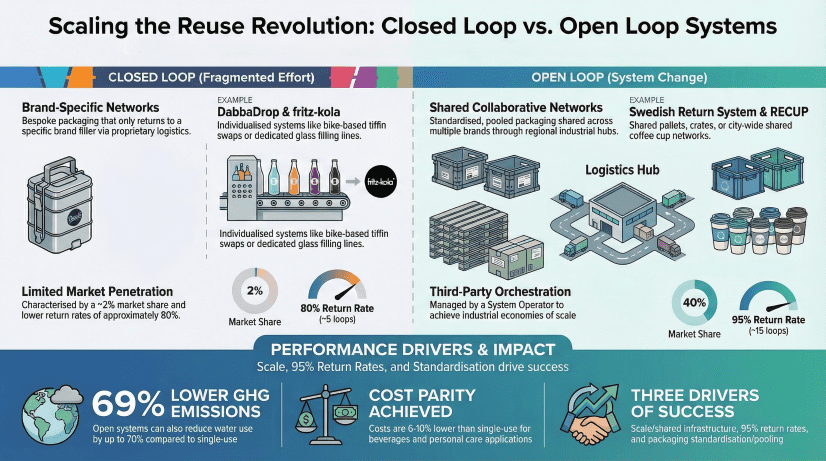
Al centro di ogni modello di riutilizzo di successo c'è l'infrastruttura e, più in particolare, l'infrastruttura di riutilizzo, come circolano i beni riutilizzabili. In linea di massima, esistono due modelli principali di circolazione: sistemi ad anello chiuso . sistemi ad anello aperto. Sebbene entrambi mirino a prolungare la durata degli imballaggi e a ridurre i rifiuti, operano in modo molto diverso e servono a casi d'uso differenti.
Sistemi di riutilizzo a ciclo chiuso
In un sistema ad anello chiuso, Gli imballaggi riutilizzabili rimangono all'interno di un ambiente chiaramente definito.
Questo può includere:
- Un unico campus aziendale
- Una rete di distribuzione o logistica dedicata
- Catene di fornitura interaziendali
- Spazi ad uso controllato come mense aziendali, festival o eventi.
Caratteristiche principali
- Circolazione definita
L'imballaggio si muove all'interno di un sistema limitato e conosciuto. Ciò significa che i beni vengono rilasciati, restituiti e riutilizzati entro gli stessi confini organizzativi o logistici. - La gestione delle risorse è essenziale
Anche in un ambiente ristretto, gli imballaggi riutilizzabili devono essere tracciati e gestiti attivamente. Senza visibilità e responsabilità, i tassi di perdita aumentano rapidamente e il riutilizzo si interrompe. - L'infrastruttura di supporto non è negoziabile
I sistemi ad anello chiuso richiedono comunque:- Logistica inversa
- Punti di raccolta
- Pulizia e manutenzione
- Tracciabilità di base o gestione dell'inventario
Quando è meglio un ciclo chiuso?
Il riutilizzo a circuito chiuso è particolarmente efficace quando:
- La rete di distribuzione è stabile e prevedibile
- Il numero di utenti è limitato e identificabile
- Il comportamento di restituzione può essere controllato attraverso politiche interne
Esempi tipici sono gli imballaggi riutilizzabili per il trasporto nella logistica, i contenitori a rendere tra gli stabilimenti di produzione o i contenitori per alimenti utilizzati nei campus aziendali.
Considerazioni finanziarie
Uno dei principali vantaggi dei sistemi ad anello chiuso è velocità di ritorno dell'investimento. Poiché le perdite sono minori e la circolazione è strettamente controllata, i sistemi raggiungono spesso il pareggio finanziario entro il 30 giugno. da uno a due anni, a volte anche più velocemente. Questo rende i cicli chiusi un punto di ingresso interessante per le organizzazioni che iniziano con il riutilizzo.
Sistemi di riutilizzo a ciclo aperto
Sistemi ad anello aperto fare un passo avanti nel riutilizzo e quindi renderlo più complesso.
In un modello ad anello aperto, l'imballaggio si muove attraverso reti più ampie, spesso:
- Tra città o regioni
- Tra più marchi
- Attraverso molti luoghi di ritorno
È qui che il riutilizzo ha il potenziale per scala a livello di sistema, ma solo se ci sono le condizioni giuste.
Caratteristiche principali
- Opzioni di restituzione flessibili
I consumatori possono restituire gli imballaggi in diversi luoghi, non necessariamente dove sono stati acquistati in origine. La convenienza è fondamentale: senza di essa, i tassi di restituzione diminuiscono drasticamente. - Infrastruttura condivisa
A differenza dei circuiti chiusi, i sistemi a circuito aperto si basano su un'infrastruttura condivisa e multimarca che comprende:- Punti di raccolta e restituzione
- Smistamento centralizzato
- Strutture di pulizia e riparazione
- Tecnologia di tracciamento
- Sistemi di incentivazione o di deposito
- Standardizzazione e pooling
L'imballaggio funziona meglio quando è standardizzati e raggruppati, permettendo così agli articoli di circolare liberamente tra i vari marchi e le varie sedi. I formati personalizzati o proprietari riducono drasticamente l'efficienza e aumentano i costi.
Dove si applicano i sistemi a circuito aperto?
I modelli di riutilizzo ad anello aperto sono tipicamente visti in:
- Tazze da asporto riutilizzabili nelle reti di caffetterie urbane
- Contenitori per la consegna di alimenti
- Imballaggi per il commercio elettronico B2C
- Schemi di restituzione degli imballaggi in tutta la città
Queste applicazioni offrono notevoli vantaggi ambientali, ma solo a fronte di un'elevata partecipazione e affidabilità del sistema.
Il comportamento e gli incentivi contano
I sistemi ad anello aperto dipendono fortemente da comportamento dell'utente. Incentivi chiari (come depositi o premi) e, in alcuni casi, penali sono fondamentali per garantire il ritorno. La convenienza da sola raramente è sufficiente; il comportamento deve essere attivamente progettato nel sistema.
Scegliere il modello giusto e farlo funzionare
Non esiste un sistema di riutilizzo universale “migliore”. Il modello giusto dipende da:
- La complessità della rete di distribuzione
- Il livello di controllo sugli utenti
- La scala desiderata
- Investimenti disponibili in infrastrutture
Tuttavia, entrambi i modelli condividono una verità comune: l'imballaggio riutilizzabile è un sistema, non un prodotto. Che si tratti di un ciclo chiuso o aperto, il riutilizzo offre valore solo se la circolazione, la tracciabilità, la pulizia e la responsabilità sono concepite in modo olistico fin dall'inizio.
Senza questa base, il riutilizzo non riduce i rifiuti, ma si limita a ritardarli. È quindi molto importante introdurre le soluzioni e le competenze giuste così come pensare a partenariati tra le catene di fornitura o all'interno di un settore.