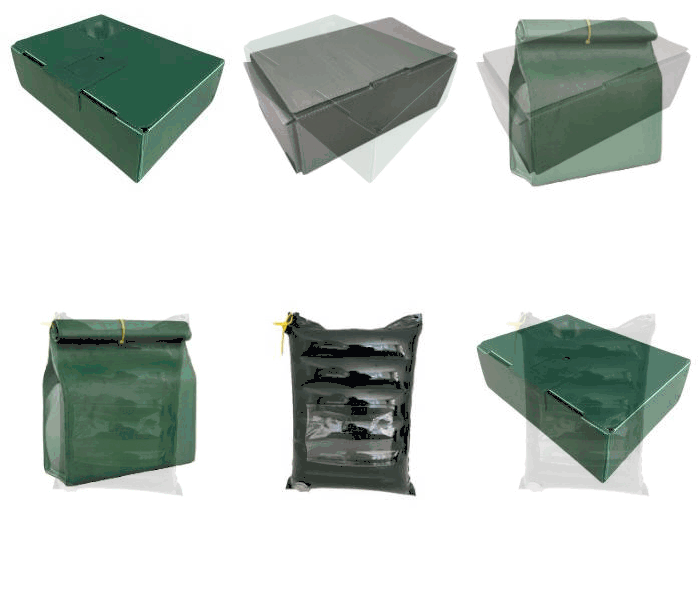
E-commerce packaging solutions

You have 2 seconds to create a positive first impression. 

Parcel boxes, mailer boxes, envelopes, all look the same.


What if you could surprise your customers

with innovative unboxing  experience?

REUSE SYSTEM FOR E-COMMERCE

What it takes
to implement?

Find out if reusable packaging fits your business

Suitable applications that benefit from waste reduction, cost savings and operational improvements thanks to reusable packaging

Szakértői támogatás
melletted

Európa-szerte működünk, és készen állunk a helyi és páneurópai projektek támogatására.

Get more loyal customers
Reduce packaging waste
Be part of a big e-commerce milestone

Ellenőrizze, mi a lehetősége

Foglaljon le egy találkozót

Menjen előre, és ütemezzen be egy kötetlen bemutatkozó találkozót, amikor Önnek tetszik. ITT.

Lépjen velünk kapcsolatba

További információra van szüksége? Meséljen nekünk a projektjéről, és 48 órán belül válaszolunk Önnek. 

    Find out what the innovation could look like for your e-commerce.

    Kérjen ingyenes szakértői értékelést
    of your opportunity

    Gyakran ismételt kérdések

    Reusable e-commerce packaging solutions

    Do e-shops need packaging to comply with the new Packaging and Packaging Waste Regulation (PPWR)?

    Yes. The EU Packaging and Packaging Waste Regulation (PPWR) introduces binding reuse targets that prescribes reusable packaging targets also for e-commerce.

    Reuse targets relevant to e-commerce:

    • General intra-EU distribution flows:
      By 1 January 2030, at least 40% of transport and sales packaging used for distribution within the EU must be reusable within a recognised reuse system (with a policy ambition to reach 70% by 2040).
    • 100% reuse for internal or intra-Member-State logistics:
      From 2030, packaging used within the same Member State or between sites of the same company must be 100% reusable within a reuse system. This applies to fulfilment centres, hubs, and returns processing sites.

    Those rules include e-commerce operations as well.

    For e-shops operating multiple warehouses or national fulfilment networks, reusable packaging is not optional. It must becomes part of compliance planning.

    At Circl’it, we recommend to start early and implement reusable packaging projects in a phased approach, adapted to fulfilment reality, allowing operators to start with selected product categories, test and fine-tune the system for full readiness on-time.

    How does reusable packaging work in e-commerce fulfilment and delivery?

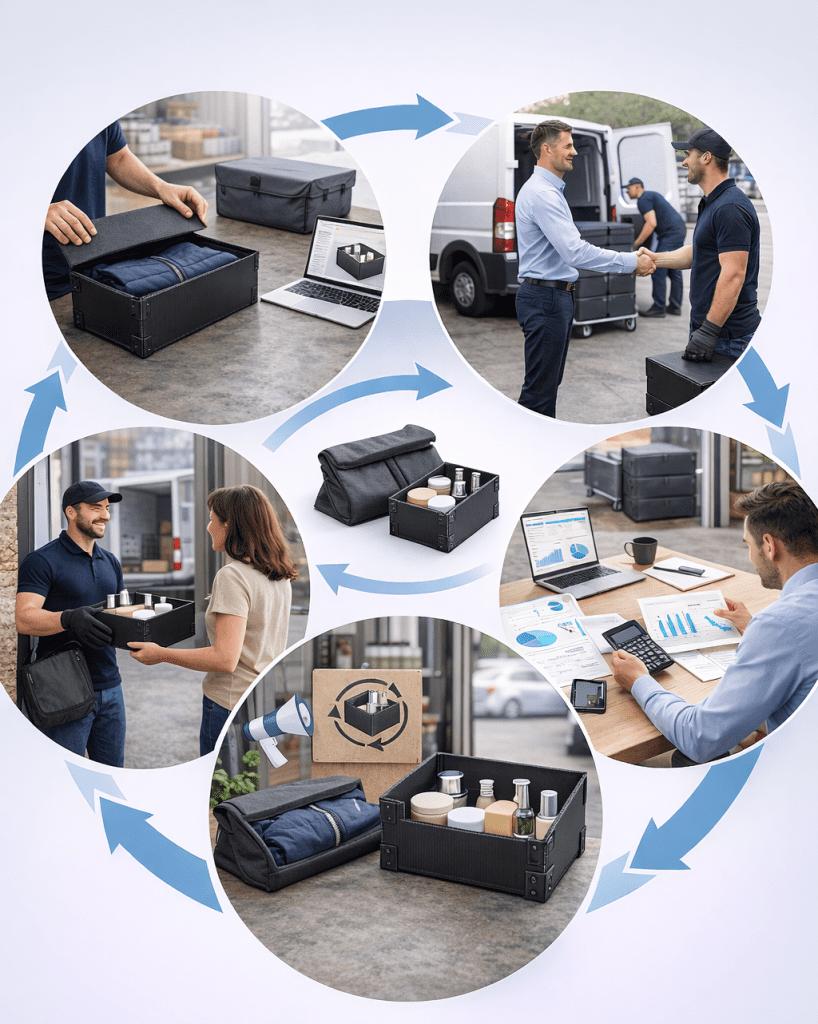
    In e-commerce, reusable packaging operates through closed-loop system within predefined network in which packaging doesn’t end up in the hands of a consumer or open-loop systems designed for wide public operating mostly with one central operator in a role of coordinator and service provider for reusable packaging management.

    A gyakorlatban:

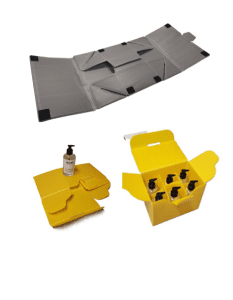
    • Reusable boxes, mailers, or crates are sized for standard SKUs and order profiles
    • Packaging circulates between branches, fulfilment centres, delivery partners, customers, or return hubs
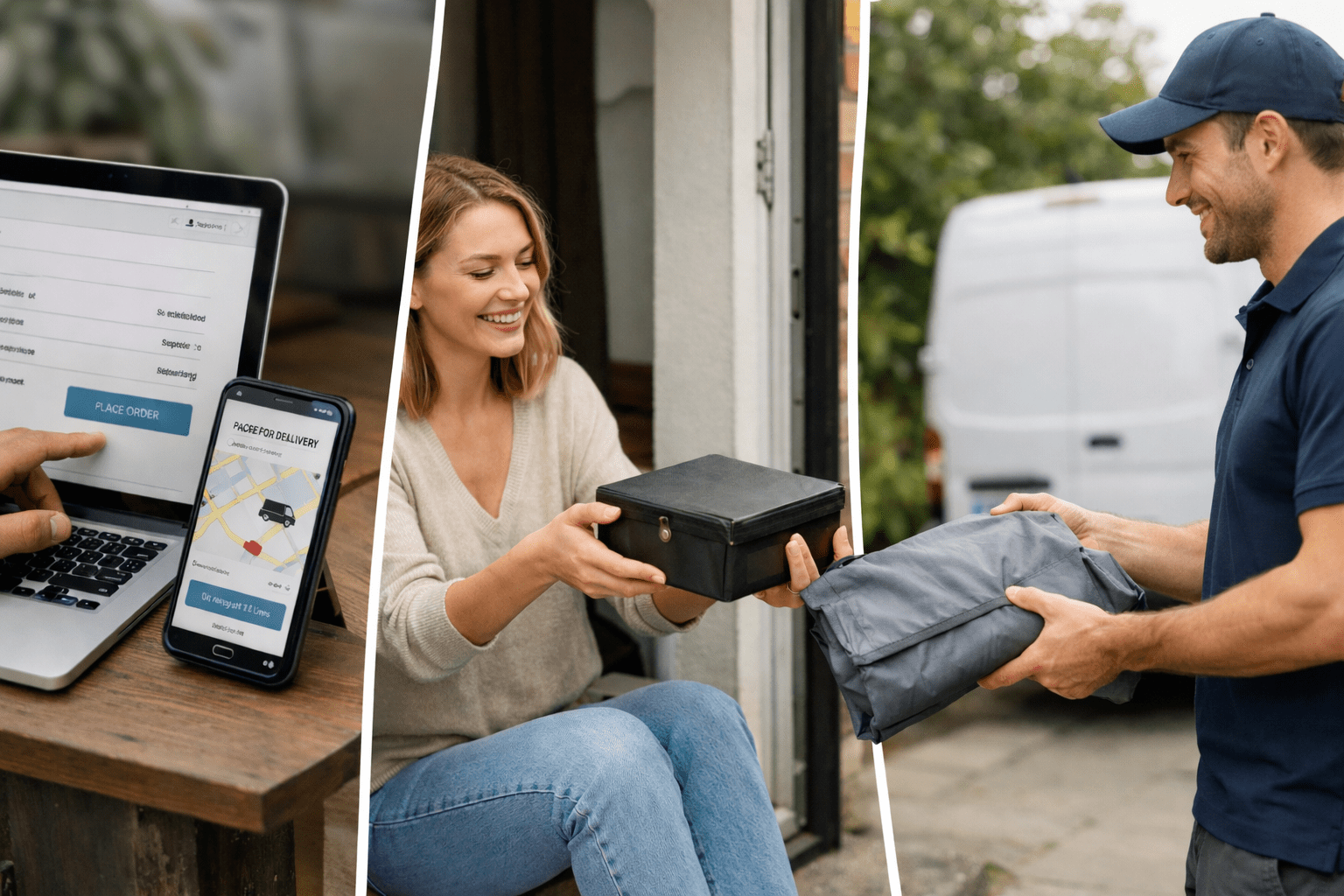
    • Returns are enabled via customer drop-off, courier pickup, or consolidation points
    • Tracking or pooling systems ensure asset availability and control

    For e-shops with repeat shipping flows, reusable packaging becomes a logistics asset embedded into daily fulfilment, and replaces the need for procuring packaging as a consumable on a frequent basis.

    Does implementing reusable packaging require major changes to fulfilment operations?

    No structural overhaul is required. Adoption is typically incremental and at Circl’it, we prioritize building on existing flows and systems for most efficient transition.

    A common e-commerce approach we chose:

    • Start with one product category or delivery route
    • Pilot reusable packaging with selected customers or regions
    • Validate returns, handling time, and customer acceptance
    • Scale gradually across the catalogue or geography

    This allows fulfilment teams to learn and optimise without operational disruption.

    Is reusable packaging relevant for last-mile delivery and returns?

    Yes. Reusable packaging is increasingly used in:

    • Home delivery and parcel locker networks
    • Click-and-collect and in-store pickup
    • Customer returns and exchanges
    • Repair, refurbishment, and resale flows

    Suitability depends on order frequency and return rates.

    Our experience shows even easier and more economic adoption of reusable packaging on last mile parcel deliveries. Transport services specialized on last mile delivery will most probably get a return on the transition within the first year of operations.

    Does reusable packaging reduce costs for e-shops?

    On a packaging material level, cost savings come from replacing recurring packaging consumables with durable, multi-use assets.

    Key cost drivers addressed:

    • Reduced spend on single-use cartons, fillers, and mailers
    • Lower waste handling and EPR-related costs for packaging placed on the market
    • Fewer damages and returns due to better product protection
    • Lower return processing costs when packaging is designed for reuse

    Through partnerships with transport operators and well designed reuse system or central pooling and service ensure that reusable packaging typically delivers a lower total cost of ownership once reuse cycles scale.

    Is reusable packaging more complex to handle in e-commerce fulfilment?

    In most fulfilment operations, complexity decreases rather than increases.

    Reusable e-commerce packaging is:

    • Tailor selected and optimized for e-shop operations, including picking, and packing stations
    • Designed for stacking, parcel sorting, and carrier handling
    • More durable, reducing exceptions, repacking, and damage claims

    Once integrated, many e-shops can expect smooth workflows maximizing productivity, through improved packaging management, elimination of some fillomg operations and reduced waste handling.

    How are returns, losses, and asset control managed in e-commerce?

    Reusable systems are designed with return logic and loss prevention built in.

    Typical mechanisms include:

    • Deposit or incentive schemes for customers
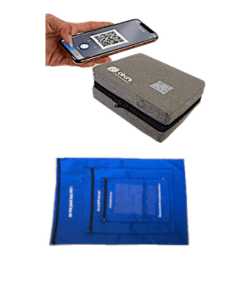
    • QR codes, serialisation, or RFID for tracking
    • Pooling or managed service models to reduce operational burden

    In mature e-commerce systems, loss rates are low and financially outweighed by packaging and waste savings. Good system design, partnerships with the supply chain actors and marketing are used to ensure effective transition.

    Is reusable packaging suitable for food, fashion, electronics, and sensitive goods?

    Yes. Reusable packaging is already applied in:

    • Grocery and meal delivery (food-contact approved materials)
    • Fashion and apparel e-commerce
    • Electronics and high-value products
    • Spare parts and accessories

    Design and materials are selected based on protection, hygiene, branding, and regulatory compliance, often outperforming single-use packaging. The knowledge of the available solutions and the expertise to select the right ones,  is one of the benefits we bring to our clients at Circl’it.

    How quickly can logistics operations see results?

    Operational and waste reduction benefits are visible within the first logistics cycles.
    Financial benefits typically become clear once packaging reaches its break-even reuse threshold, often within months for high-frequency distribution and transport flows.

    When is reusable packaging not the right solution for e-commerce?

    Az újrahasználható csomagolás nem alkalmas, ha:

    • Orders are one-off or highly irregular with very concentrated peaks of sales
    • Return logistics is difficult to organize
    • Volumes are extremely low or geographically dispersed

    In these cases, as Circl’it, we offer our clients rather packaging optimisation through right-sizing, material reduction, and optimized packaging management instead.

    Ez a weboldal sütiket tárol az Ön számítógépén. Cookie szabályzat