L'Allemagne est actuellement à l'avant-garde du passage d'une “société du jetable” à une économie circulaire.
Voici trois exemples inspirants :
🏙️ Tübingen a été la première à mettre en place une taxe urbaine innovante sur les produits à usage unique (50c pour les contenants de nourriture/boisson, 20c pour les couverts). Malgré une contestation juridique de la part d'une grande chaîne de restauration rapide (McDonald), la ville allemande 𝐅𝐞𝐝𝐞𝐫𝐚𝐥 𝐂𝐨𝐧𝐬𝐭𝐢𝐭𝐮𝐭𝐢𝐨𝐧𝐚𝐥 𝐂𝐨𝐮𝐫𝐭 𝐮𝐩𝐡𝐞𝐥𝐝 𝐭𝐡𝐞 𝐭𝐚𝐱 est considérée comme légalement admissible. La ville a accordé des subventions allant jusqu'à 1 000 euros aux entreprises pour l'installation de lave-vaisselle et jusqu'à 500 euros pour l'adhésion à des systèmes de piscines réutilisables existants. En conséquence, cette politique a permis à elle seule de réduire les déchets des poubelles publiques de 15% au cours du premier mois.
🍃 𝐅𝐫𝐞𝐢𝐛𝐮𝐫𝐠, longtemps connue comme la “ville la plus verte” d'Allemagne, a lancé le FreiburgCup en 2016, un système volontaire où les clients paient une caution de 1 € et peuvent retourner le gobelet dans l'un des plus de 100 cafés participants. En conséquence, la ville passe maintenant à l'étape suivante : à partir de 2026, Fribourg mettra en œuvre sa propre taxe obligatoire sur les emballages à usage unique pour correspondre aux taux de Tübingen, en utilisant les recettes pour financer la gestion publique des déchets.
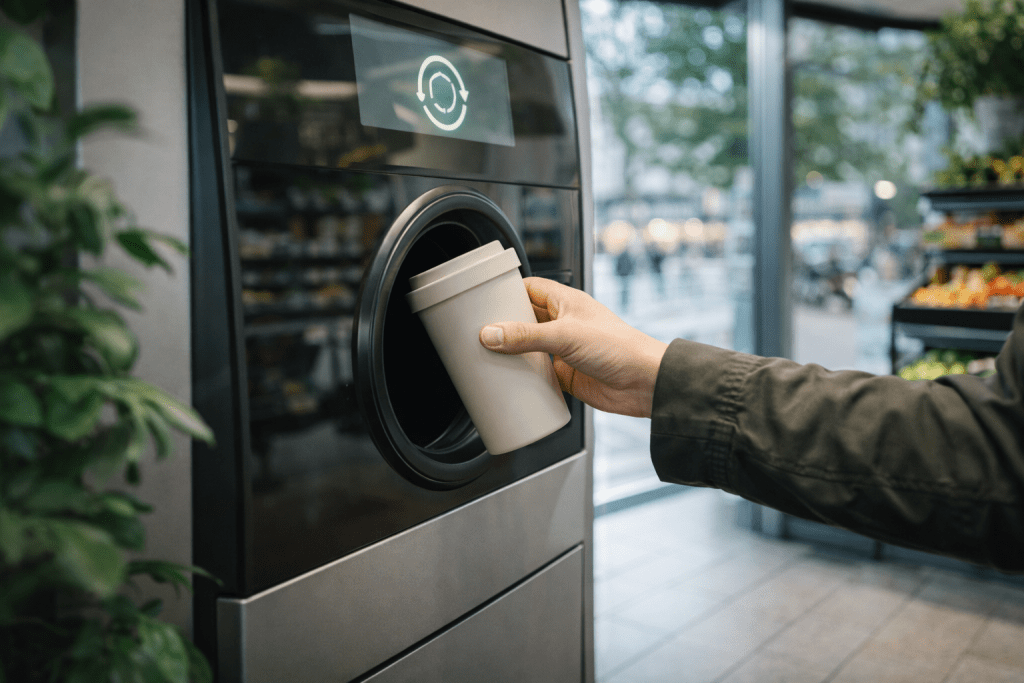
🛒 𝐁𝐞𝐫𝐥𝐢𝐧 met en œuvre le “ReuSe Vanguard Project” (RSVP), qui vise à rendre le retour d'une tasse de café aussi facile que celui d'une bouteille de bière. En connectant plus de 80 𝐜𝐚𝐟é𝐬 𝐰𝐢𝐭𝐡 𝐑𝐞𝐰𝐞 𝐬𝐮𝐩𝐞𝐫𝐦𝐚𝐫𝐤𝐞𝐭𝐬, les clients peuvent désormais retourner différentes marques de gobelets réutilisables (comme RECUP et Sykell) via des distributeurs automatiques inversés (RVM). Ce système utilise 𝐜𝐞𝐧𝐭𝐫𝐚𝐥𝐢𝐬𝐞𝐝 𝐢𝐧𝐝𝐮𝐬𝐭𝐫𝐢𝐚𝐥 𝐰𝐚𝐬𝐡𝐢𝐧𝐠 𝐚𝐧𝐝 𝐜𝐞𝐧𝐭𝐫𝐚𝐥 𝐭𝐫𝐚𝐜𝐤𝐢𝐧𝐠 𝐬𝐲𝐬𝐭𝐞𝐦. Les premiers résultats montrent que 84% 𝐨𝐟 𝐜𝐮𝐬𝐭𝐨𝐦𝐞𝐫𝐬 sont plus enclins à choisir la réutilisation lorsqu'ils peuvent retourner les articles au supermarché.
💡 3 𝐊𝐄𝐘 𝐓𝐀𝐊𝐄𝐀𝐖𝐀𝐘𝐒 𝐅𝐑𝐎𝐌 𝐓𝐇𝐄 𝐆𝐄𝐑𝐌𝐀𝐍 𝐌𝐎𝐃𝐄𝐋 :
1️⃣ 𝐋𝐨𝐜𝐚𝐥 𝐚𝐮𝐭𝐡𝐨𝐫𝐢𝐭𝐢𝐞𝐬 𝐥𝐞𝐚𝐝𝐢𝐧𝐠 𝐛𝐲 𝐞𝐱𝐚𝐦𝐩𝐥𝐞 : Le courage de villes comme Tübingen, qui ont été les premières à défendre fermement leur décision, a ouvert la voie à l'action du reste du pays. Leur ambition prouve que les autorités locales peuvent être le moteur d'un changement national.
2️⃣ 𝐓𝐡𝐞 “𝐅𝐚𝐬𝐭 𝐅𝐨𝐥𝐥𝐨𝐰𝐞𝐫” 𝐀𝐜𝐜𝐞𝐥𝐞𝐫𝐚𝐭𝐞𝐬 𝐂𝐡𝐚𝐧𝐠𝐞 : et actuellement, 𝐨𝐯𝐞𝐫 150 𝐆𝐞𝐫𝐦𝐚𝐧 𝐜𝐢𝐭𝐢𝐞𝐬 planifient ou envisagent leurs propres taxes sur les emballages. Et lorsque les pionniers prouvent qu'un modèle fonctionne, des suiveurs rapides transforment une expérience locale en norme nationale.
3️⃣ 𝐂𝐨𝐧𝐯𝐞𝐧𝐢𝐞𝐧𝐜𝐞 + 𝐏𝐨𝐥𝐢𝐜𝐲 = 𝐒𝐮𝐜𝐜𝐞𝐬𝐬. Les infrastructures telles que les supermarchés RVM de Berlin rendent la réutilisation compétitive par rapport à l'usage unique en s'intégrant dans les habitudes quotidiennes des habitants et en tirant parti d'une infrastructure existante.
Si vous souhaitez en savoir plus sur les villes européennes, lisez notre avis sur Aarhus, Danemark ou Lisbonne, Portugal.
Au Circl'it, Nous sélectionnons ensuite les types d'emballages appropriés et les fournissons sous la forme d'un système d'emballages réutilisables cohérent et prêt à être déployé, ce qui vous évite d'avoir à gérer plusieurs fournisseurs.
Sources : Zero Waste Europe études, packaging Gateway, Packaging Journal, étude de l'Université du Maine.