
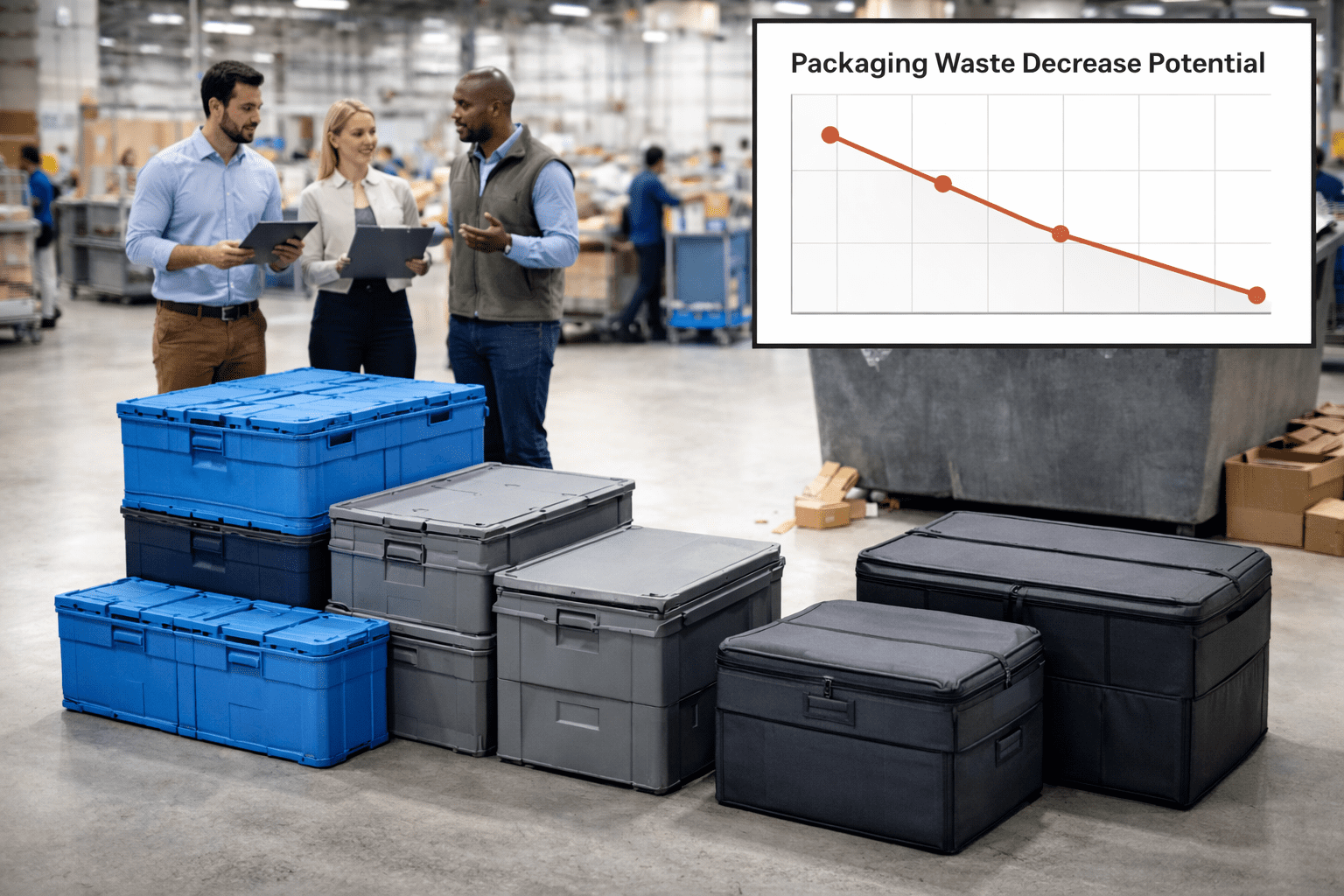
Realizzare il potenziale di riduzione dei rifiuti di imballaggio
Rivelare le opportunità di riduzione dei rifiuti attraverso l'ottimizzazione, la standardizzazione e le soluzioni circolari.
Trasformate la complessità del packaging in chiarezza e conformità al PPWR.
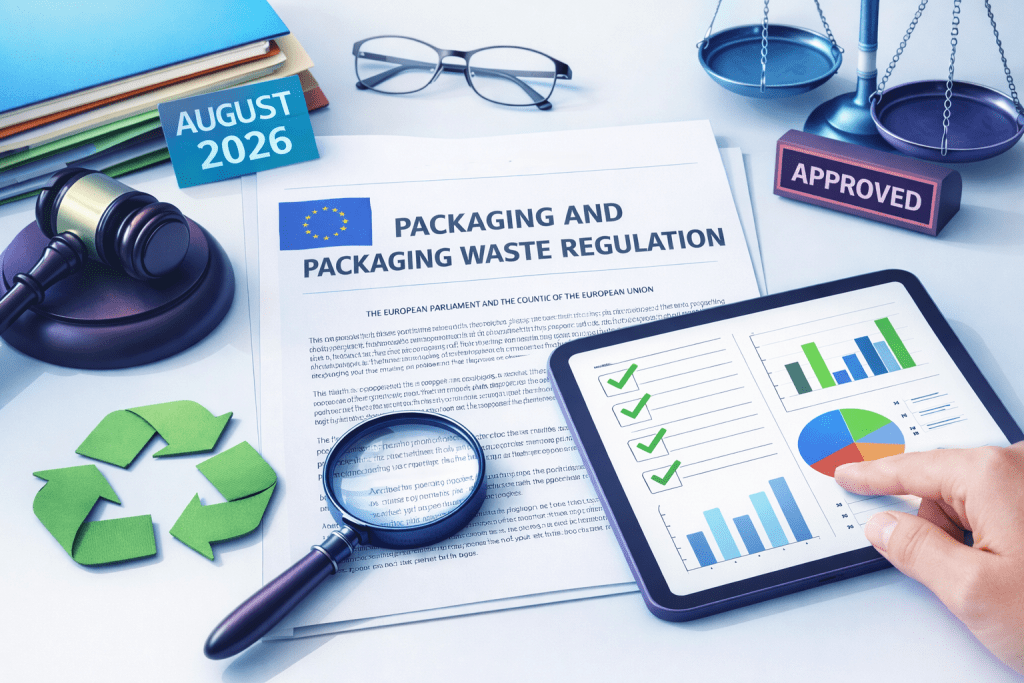
Assicurare la tempestività Conformità al PPWR
Il regolamento sugli imballaggi e i rifiuti di imballaggio (PPWR) entrerà in vigore dall'agosto 2026. Rileviamo i requisiti per voi e li traduciamo in un piano chiaro e pratico, riducendo il rischio di non conformità e rendendo il tutto più pratico e semplice per le vostre attività.
Smettila di preoccuparti dell'imballaggio

Ottenere una roadmap del packaging a prova di futuro
Valutiamo il vostro stato attuale e definiamo una roadmap di packaging fattibile, allineata all'efficienza dei costi, alla realtà operativa e ai requisiti normativi.

Scoprite le innovazioni e le soluzioni giuste
Identificare e convalidare le innovazioni di packaging che si adattano alla vostra attività, alle vostre operazioni e ai vostri obiettivi. Creare una differenziazione reale a livello di mercato.

Costruire un caso interno per l'imballaggio sostenibile
Quantifichiamo il potenziale di riduzione dei rifiuti di imballaggio e di risparmio economico, presentiamo soluzioni innovative e misure di conformità, per rendere il vostro caso interessante.
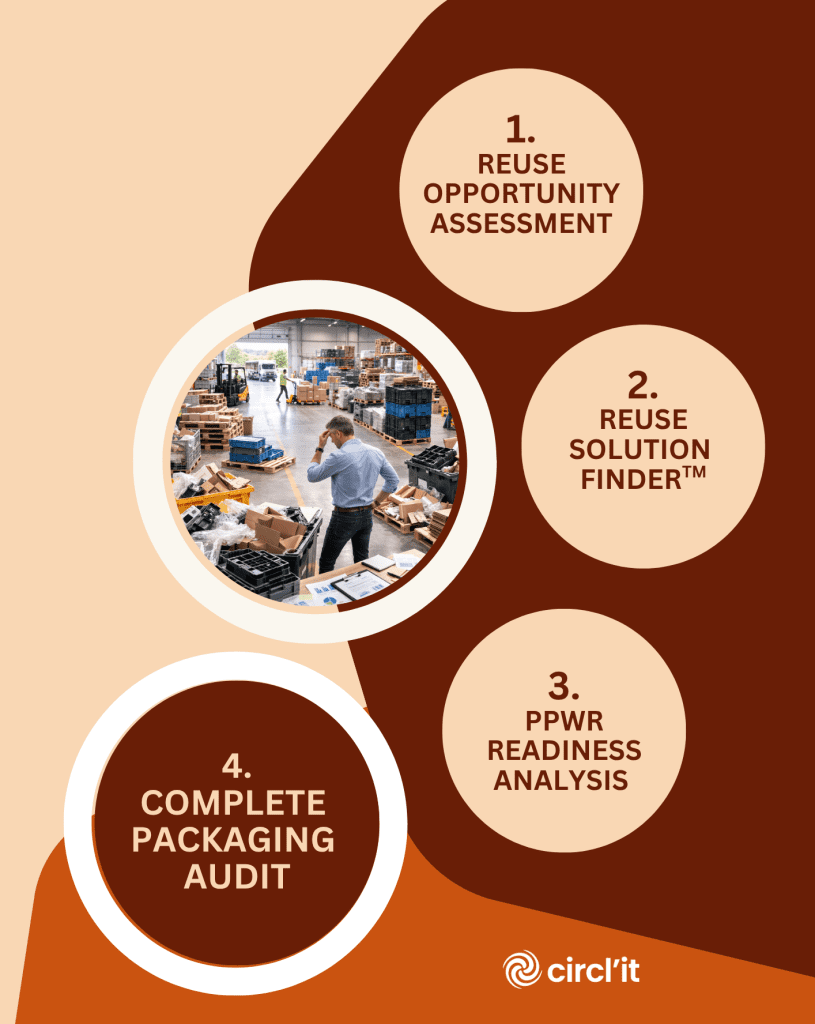
OPZIONI DI REVISIONE DEGLI IMBALLAGGI
1. Valutazione delle opportunità di riutilizzo
Identificare i punti in cui il miglioramento ha davvero senso
Esaminiamo i vostri attuali flussi di materiali, i percorsi logistici e le procedure di imballaggio.
Identifichiamo dove l'ottimizzazione del packaging può realisticamente ridurre gli sprechi, la complessità e i costi.
Prodotti da consegnare
- Identificazione delle opportunità di riduzione degli sprechi e di risparmio dei costi
- Aree di miglioramento prioritarie con scenari chiari (ottimizzare, testare o escludere)
- Rapporto pronto per la gestione per l'allineamento e il processo decisionale
2. Trova soluzioni di riutilizzoTM
Dall'intuizione alle opzioni pronte per l'implementazione
Sulla base della valutazione, definiamo i requisiti specifici dell'applicazione per l'imballaggio, la movimentazione, lo stoccaggio e il trasporto. A questi corrispondono soluzioni di imballaggio riutilizzabili adeguate dal punto di vista tecnico e operativo.
Prodotti da consegnare
- Requisiti operativi e tecnici confermati per ogni applicazione
- Lista ristretta di soluzioni idonee con chiari criteri di selezione
- Rapporto con raccomandazioni concrete per l'attuazione
3. Analisi della prontezza del PPWR
Tradurre la normativa in azioni pratiche
Valutiamo gli obblighi PPWR rilevanti per la vostra attività e li confrontiamo con la vostra attuale configurazione di packaging. Riceverete indicazioni chiare su lacune, rischi e azioni prioritarie.
Prodotti da consegnare
- Panoramica degli obblighi del PPWR applicabili alle vostre operazioni
- Valutazione delle lacune rispetto alle attuali pratiche di confezionamento
- Raccomandazioni pratiche e indicazioni sulle priorità
4. Audit completo degli imballaggi
Prodotti da consegnare
- Quantificazione delle prestazioni di imballaggio di base: identificare le opportunità di riduzione degli sprechi, dei costi e della complessità tecnicamente realizzabili nei flussi di materiali e nella logistica
- Roadmap di implementazione specifica per l'applicazione: comprese le misure di ottimizzazione prioritarie e le raccomandazioni di soluzioni di packaging tecnicamente convalidate.
- Analisi del gap di conformità del PPWR: tradurre i requisiti normativi in azioni tecniche concrete e priorità di attuazione.
Guida esperta
dalla tua parte
Operiamo in tutta Europa e siamo pronti ad assistere progetti locali e paneuropei.

Verificate quali sono le vostre opportunità
Prenotare una riunione
Fissate un incontro introduttivo non vincolante a vostro piacimento. QUI.
Richiedi maggiori informazioni su Audit degli imballaggi
Comunicateci i vostri dati e vi forniremo ulteriori informazioni su come il nostro Packaging Audit può supportare i vostri obiettivi.
Casi di studio in evidenza

3 febbraio 2025
🚚 Una società di logistica riduce i costi ed elimina gli sprechi con le scatole da trasporto riutilizzabili
Un rivenditore di e-commerce, che spedisce migliaia di piccoli pacchi al mese, è riuscito a sostituire gli imballaggi di carta e plastica monouso riducendo i rifiuti e coinvolgendo i clienti.

3 marzo 2025
🛍️ E-Shop riduce le emissioni di CO₂e di 87% con imballaggi riutilizzabili
Un rivenditore di e-commerce, che spedisce migliaia di piccoli pacchi al mese, è riuscito a sostituire gli imballaggi di carta e plastica monouso riducendo i rifiuti e coinvolgendo i clienti.
17 febbraio 2025
🌍 Un produttore vince una gara d'appalto nel settore sanitario grazie al vantaggio dell'imballaggio sostenibile
Le credenziali di sostenibilità sono parte integrante dei criteri di qualificazione nel settore sanitario. L'impegno pubblico per la sostenibilità, un chiaro piano d'azione e risultati misurabili fanno la differenza.
Verificate cosa funziona meglio per la vostra azienda
Domande frequenti
Cosa vogliono sapere i nostri clienti prima di procedere con il Packaging Audit
Dobbiamo impegnarci a utilizzare imballaggi riutilizzabili per iniziare la valutazione?
No. La valutazione è stata concepita per valutare innanzitutto la fattibilità. Identifica dove il riutilizzo ha senso e dove non ne ha, senza che ciò comporti l'obbligo di procedere.
L'audit sugli imballaggi interromperà le nostre attività?
No. Il lavoro si basa sull'esame dei dati, sulla comprensione del sito e su discussioni mirate. Non sono richieste modifiche operative o prove. Lavoriamo il più possibile con i dati o i report esistenti e coinvolgiamo i vostri team sulla base di quanto concordato e minimo necessario.
Si tratta solo di sostenibilità o anche di costi?
Entrambi. L'attenzione è rivolta all'ottimizzazione del packaging: fattori di costo, efficienza di movimentazione, riduzione degli scarti e impatto operativo. I vantaggi della sostenibilità vengono affrontati laddove si allineano con il valore aziendale.
Perché non selezionare direttamente gli imballaggi ed eseguire un pilota?
Saltare la valutazione è uno dei motivi più comuni per cui i progetti di riutilizzo falliscono. La scansione riduce il rischio identificando i vincoli in anticipo, prima che si perdano denaro e credibilità interna.
È davvero necessario il supporto di un esperto in questa fase?
Vi porta più velocemente dall'idea alla decisione, evitando gli errori più comuni.
Correggere le ipotesi sbagliate dopo l'implementazione è molto più costoso che convalidare la fattibilità in anticipo. Valutiamo l'opportunità e il valore commerciale su misura per la vostra azienda.
Quanto dura in genere l'audit?
A seconda dell'ambito e della disponibilità dei dati, la maggior parte degli audit viene completata in poche settimane, abbastanza velocemente per mantenere lo slancio e in modo sufficientemente strutturato per supportare le decisioni.
Chi deve essere coinvolto nella nostra organizzazione?
In genere operazioni, logistica, approvvigionamento, imballaggio e sostenibilità. Il processo è progettato per essere efficiente e rispettare i vincoli temporali interni.