Looking for reduction of packaging waste in logistics?
Single-use packaging create waste across logistics operations and are costs you can avoid. Discover how reusable packaging systems streamline your transport flows, reduce packaging waste, and improve cost and productivity performance.
Reusable packaging for distribution, transport and logistics

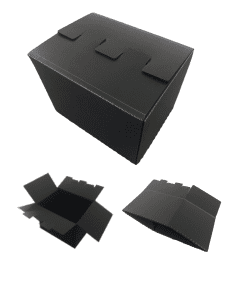
Corrugated plastic solutions
Durable, lightweight containers for high-frequency transport loops. Designed to protect goods, reduce damage, and replace disposable cartons in repeat logistics flows.
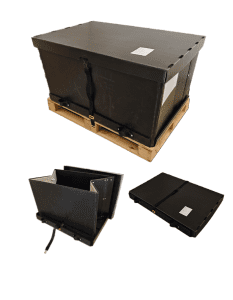
Big boxes
Foldable reusable containers for palletized and bulk transport. Ideal for inter-facility movements, parts distribution, and reverse logistics operations.
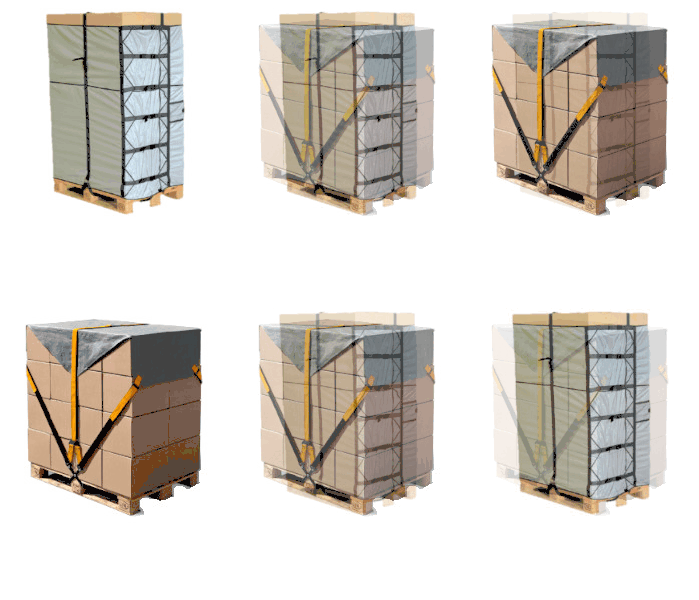
Reusable pallet wraps
Replacing stretch film with durable, reusable pallet securing systems. Improving load stability, reducing plastic waste, and lower recurring consumables costs.
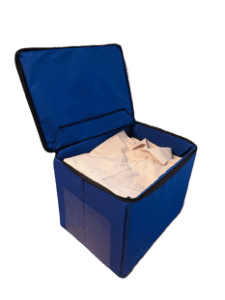
Plastic-free solutions
Upcycled fabric, stone paper Flexible, lightweight packaging made from upcycled or plastic-free materials. Suitable for small higher value parcels, documents, and applications where sustainability credentials matter to end customers.

Create competitive logistics infrastructure through reusable packaging
Position for the long-term
Achieve more resilient operations through stable packaging infrastructure that resist packaging prices' volatility.
Optimize & stabilitze costs
Reduce spend on packaging, waste handling and disposal. Prepare on-time for compliance with packaging and reuse-related regulations.
Be the innovator on your market
Offer your customers attractive and effective way of shipping goods. Your commitment to responsible shipping will be noticed.
Skúsenosti
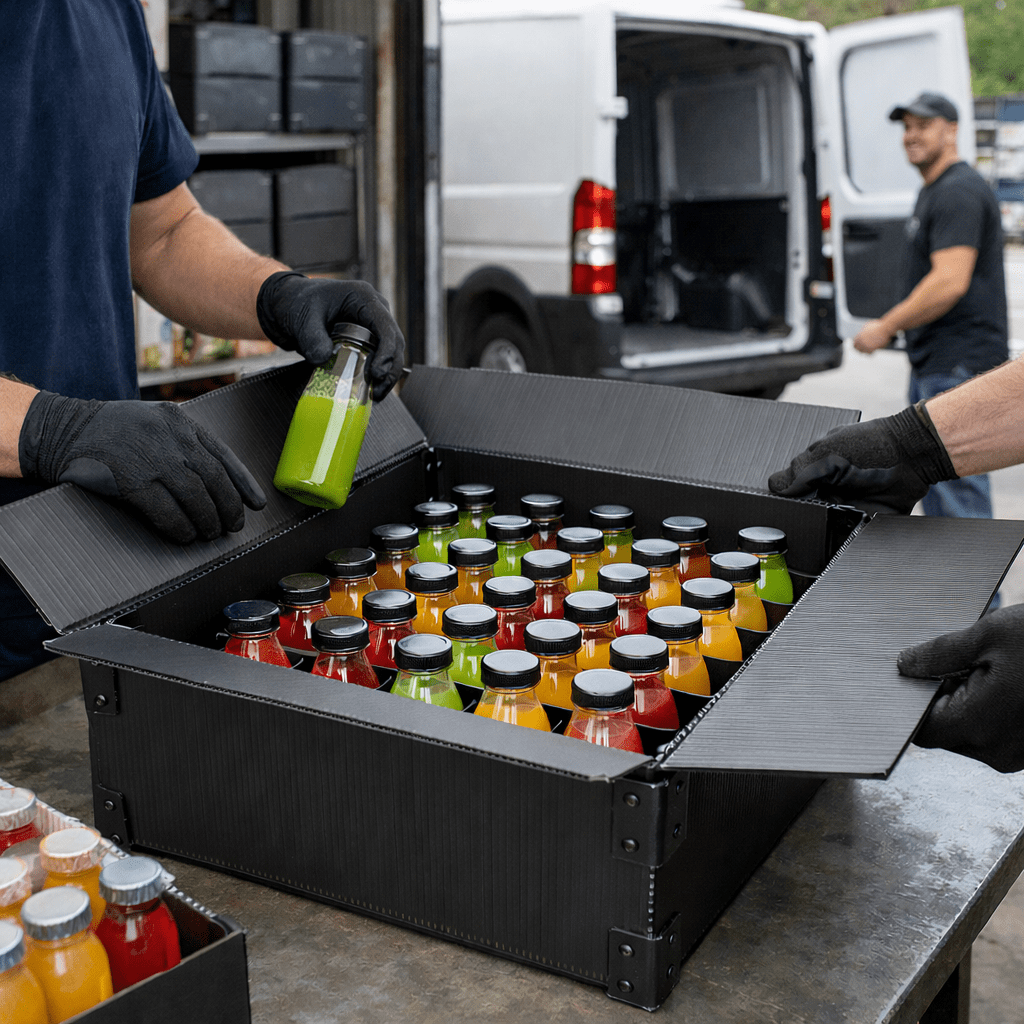
Fresh drinks distribution
Find out if reusable packaging fits your business
Meet the innovators of e-commerce packaging
🚚 Logistická spoločnosť znižuje náklady a eliminuje odpad vďaka opakovane použiteľným prepravným boxom
Zavedenie opakovane použiteľných prepravných a skladovacích obalov je rýchlou výhrou pre poskytovateľov logistických služieb a ich zákazníkov, ktorí chcú znížiť náklady na likvidáciu obalov a získať merateľné údaje o udržateľnosti.

🛍️ E-Shop znižuje emisie CO₂e o 87% vďaka opakovane použiteľným obalom
Maloobchodný e-shop, ktorý mesačne odosiela tisíce malých balíkov, dokázal nahradiť jednorazové papierové a plastové obaly, čím znížil množstvo odpadu a zaujal zákazníkov.

🌍 Globálny výrobca vyhral tender v oblasti zdravotníctva s udržateľným obalom
Certifikáty udržateľnosti sú neoddeliteľnou súčasťou kvalifikačných kritérií v sektore zdravotníctva. Verejný záväzok k udržateľnosti, jasný akčný plán a merateľné výsledky majú veľký význam.
Odborná podpora on your side
Pôsobíme v celej Európe a sme pripravení pomôcť miestnym aj celoeurópskym projektom.
Skontrolujte, aká je vaša príležitosť
Rezervovať stretnutie
Naplánujte si nezáväzné úvodné stretnutie, ktoré vám bude vyhovovať TU.
Kontaktujte nás
Hľadáte ďalšie informácie? Povedzte nám o svojom projekte a my sa vám ozveme do 48 hodín.
What is your opportunity?
Často kladené otázky
Reusable packaging in Distribution, Transport and Logistics
How does reusable packaging work in distribution, transport, and logistics operations?
Reusable packaging is deployed as closed-loop or open-loop systems within logistics networks. Closed-loop systems operate within fixed, predictable routes where packaging circulates between known partners and locations. Open-loop systems allow packaging to move across multiple customers or networks with return enabled through pooling or managed recovery models.
V praxi:
- Packaging is sized and specified for the application (e.g. pallets, parcels, parts)
- Assets circulate between warehouses, production sites, hubs, customers, or service centers
- Tracking, pooling, or asset management systems ensure availability and control
This approach replaces disposable packaging with durable logistics assets integrated into everyday operations.
How does reusable packaging reduce costs in logistics and transport?
Cost reduction comes from shifting from recurring consumables to durable assets.
Key cost drivers addressed:
- Lower spend on single-use packaging procurement
- Reduced waste management, disposal, and EPR-related costs, single use packaging in some countries
- Fewer damages due to stronger, fit-for-purpose packaging
- Improved handling efficiency and faster packing/unpacking
In distribution and transport operations with repeat flows, reusable packaging typically delivers lower total cost of ownership over time.
Do I need to implement reusable packaging to comply with the new Packaging and Packaging Waste Regulation?
Yes — the EU Packaging and Packaging Waste Regulation (PPWR) introduces binding reuse targets for transport and logistics packaging as part of compliance requirements. These targets differentiate between general cross-border logistics flows and intra-company or within-Member-State flows, reflecting the regulatory ambition to scale reuse in predictable transport systems.
Reuse targets under the PPWR:
- General reuse target (intra-EU flows):
By 1 January 2030, at least 40 % of transport and sales packaging used for transporting products within the EU must be reusable within a recognised reuse system (increasing to an aspirational 70 % by 2040).
- 100 % reuse for internal or intra-Member-State logistics:
Economic operators using transport or sales packaging within the same Member State or between sites of the same company (or affiliated partners) must ensure that 100 % of that packaging is reusable within a reuse system from 1 January 2030 onward. This includes pallets, crates, foldable boxes, trays, drums, and similar reusable formats (with some exemptions, e.g., cardboard or packaging for dangerous goods).
We recognize it can be seen as a big challenges. Often this is how our customers started to work with us. At Circl’it, we have the understanding that the implementation needs to be phased and tailored to your business, to make it easier for you.
What this means in practice
- For cross-border or multi-partner logistics flows, meeting the 40 % (2030) and progressing toward 70 % (2040) reuse thresholds will be necessary to comply with PPWR obligations.
- For internal logistics (intra-company) or distribution within a single Member State, operators are expected to achieve 100 % reuse of qualified transport packaging in reuse systems for compliance by 2030.
Is reusable packaging more complex to handle than single-use solutions?
In most logistics environments, handling complexity decreases rather than increases.
Reusable packaging is:
- Standardized in size and format while selected to fit the operations and merchandise
- Designed for stacking, palletization, and mechanized handling
- More robust, reducing repacking and exceptions
Once integrated, operators often report simpler workflows compared to managing multiple disposable packaging types, variable quality, and waste streams.
Ako opakovane použiteľné obaly znižujú vplyv na životné prostredie?
No structural overhaul is required. Implementation is typically phased and controlled.
A standard approach includes:
- Selecting one or two high-volume logistics flows
- Running a pilot to validate handling, returns, and cost impact
- Scaling step by step across additional routes or applications
Change is managed at process level, not organizational level, making adoption practical even in complex logistics networks.
Each time we worked it this way, customers confirmed that it made the change easier to adopt and it allowed for gradual learning and fine-tuning of the final solution.
Does implementing reusable packaging require major operational change?
No structural overhaul is required. Implementation is typically phased and controlled.
A standard approach includes:
- Selecting one or two high-volume logistics flows
- Running a pilot to validate handling, returns, and cost impact
- Scaling step by step across additional routes or applications
Change is managed at process level, not organizational level, making adoption practical even in complex logistics networks.
Each time we worked it this way, customers confirmed that it made the change easier to adopt and it allowed for gradual learning and fine-tuning of the final solution.
Is reusable packaging relevant for transport and logistics beyond internal flows?
Yes. Reusable packaging is increasingly applied across:
- Inter-facility and cross-border transport
- Supplier and customer distribution loops
- Parcel logistics and last-mile delivery
- Repair, refurbishment, and reverse logistics
Relevance depends on frequency, volume, and predictability of flows, not ownership of the logistics operation.
What about returns, losses, or asset control?
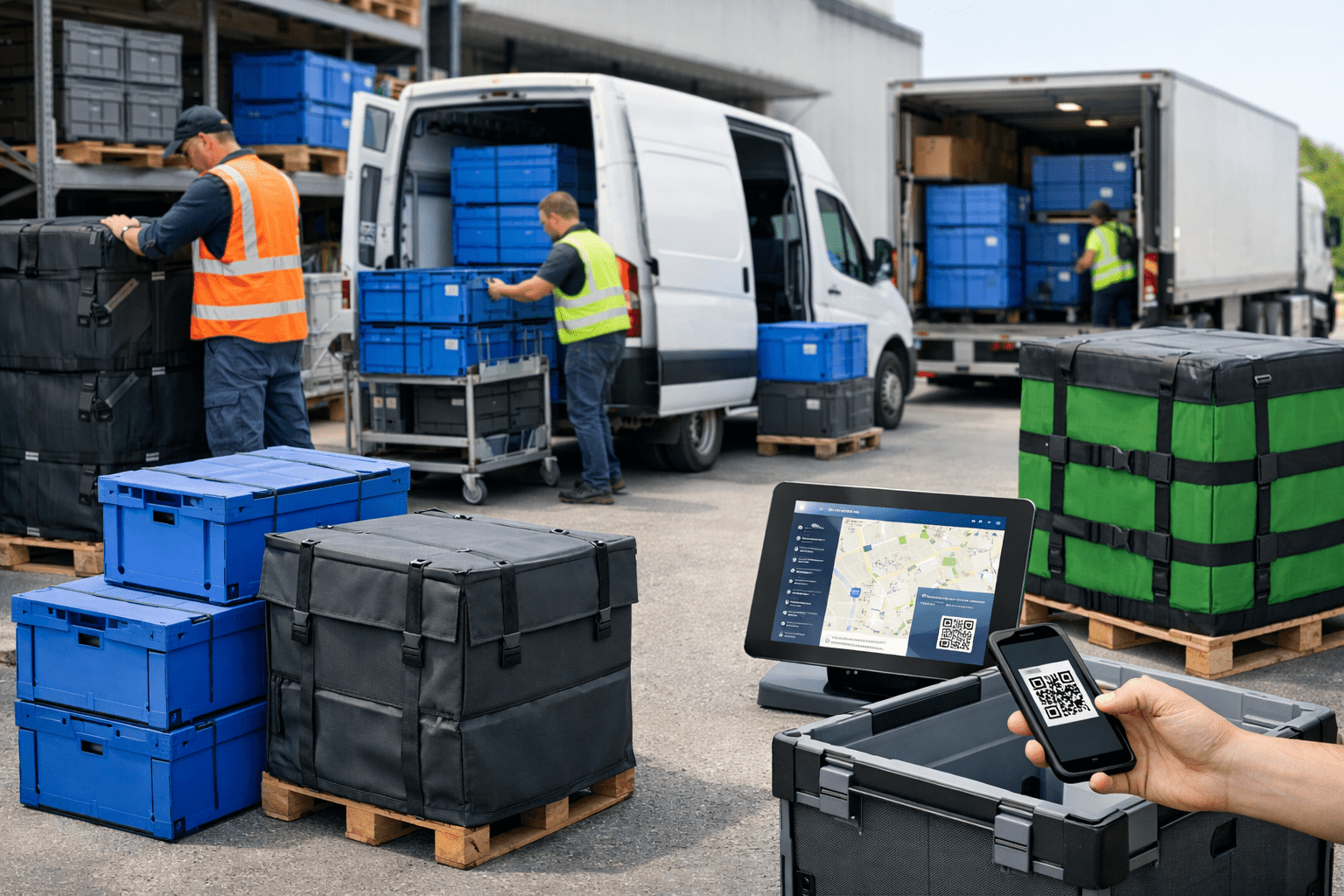
Reusable packaging systems include return logic and asset management by design.
Options include:
- Deposit or incentive mechanisms
- Tracking and identification (QR, RFID, serials)
- Pooling or managed service models
Loss rates in mature systems are typically low and significantly outweighed by cost and waste reductions.
Is reusable packaging suitable for food, parts, and sensitive goods distribution?
Yes. Reusable packaging is widely used in:
- Food & beverage distribution (with hygienic and food contact approved materials)
- Automotive and industrial parts logistics
- Electronics, components, and high-value goods
Materials and designs are selected based on protection, hygiene, and compliance requirements, often outperforming single-use alternatives.
How quickly can logistics operations see results?
Operational and waste reduction benefits are visible within the first logistics cycles.
Financial benefits typically become clear once packaging reaches its break-even reuse threshold, often within months for high-frequency distribution and transport flows.
Kedy opakovane použiteľné obaly nie sú správnym riešením?
Obaly na opakované použitie nemusia byť vhodné, ak:
- Flows are one-off or highly irregular
- Return logistics are not feasible
- Objemy sú mimoriadne nízke
In these cases, optimization focuses on right-sizing, material reduction, or recyclable solutions instead.