
Odpověď může rozhodnout o vašem stabilita nákladů, provozní náročnost a odolnost..
Pojďme si vysvětlit proč.
Obaly na jedno použití se staly finančně nestabilními
V mnoha firmách se obaly nenápadně staly jedním z nejvýznamnějších nestabilní prvky COGS a provozních nákladů. Tradiční model balení na jedno použití je tak ze všech stran vystaven riziku:
- Volatilita cen surovin
- Žádná předvídatelnost nákladů nad rámec krátkodobých smluv
- Přímé vystavení regulačním změnám a zvyšování poplatků EPR
- Žádná rozvahová hodnota
Každá zásilka se stává novou událostí při zadávání veřejných zakázek, a proto se stává riziko nákladů se přenáší přímo na provoz.
Tento model fungoval, když byly materiály levné, regulace nenáročná a zásobování bohaté, nicméně tyto podmínky již neexistují.
Jak opakovaně použitelné obaly zmírňují nestálost a náročnost provozu ?
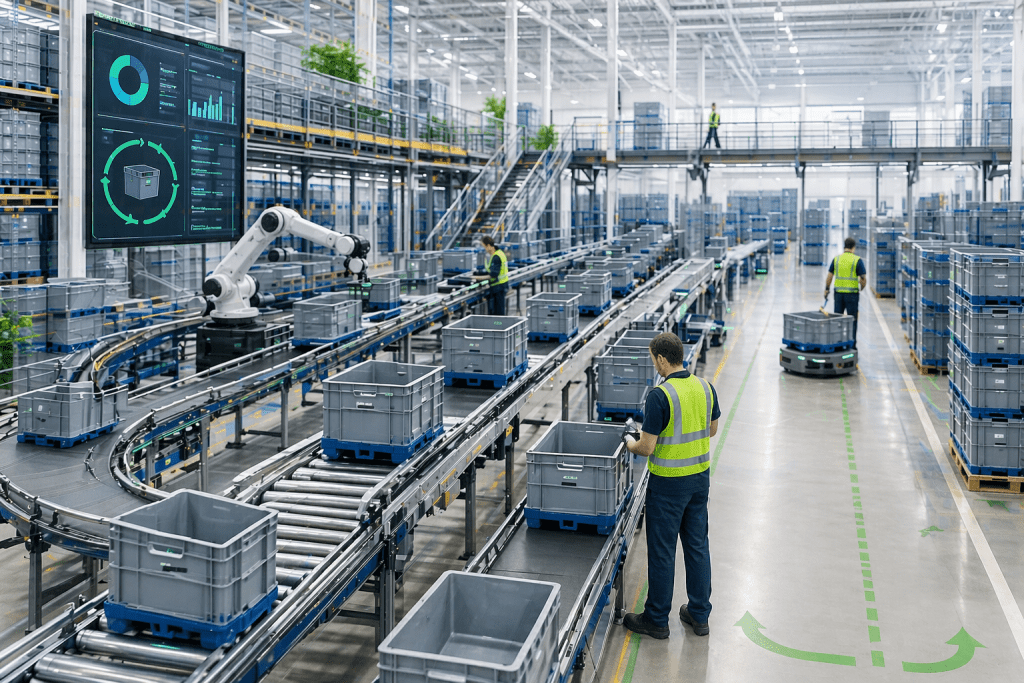
Přechod na opakovaně použitelné obaly není taktickým zlepšením. Stal se strategický přechod od výdajů k infrastruktuře.
Opakovaně použitelné obaly zásadně mění finanční a provozní logika balení.
Zde je návod, jak na to:
1. Stabilita nákladů díky infrastruktuře
Opakovaně použitelné obaly vytvářejí stabilitu díky své konstrukci.
Je to tak:
- Izolace od každodenních výkyvů cen surovin
- Menší závislost na neustálém vyjednávání s dodavateli
- Určeno pro předvídatelné celkové náklady na vlastnictví (TCO).
Z mnoha studií v oboru vyplývá, že nákladové neutrality nebo čistých úspor se obvykle dosáhne po 10-25 cyklech., v závislosti na aplikaci, přepravních smyčkách a míře využití (Ellen MacArthur Foundation, 2024).
Po nasazení ve velkém měřítku se náklady na balení stávají spíše strukturální než transakční.
2. Odepisovatelný majetek. Ne spotřební materiál
Na rozdíl od jednorázových obalů mají opakovaně použitelné obaly tyto výhody:
- Může být kapitalizované ve většině případů
- Je odepisované po dobu několika let
- Může být sledovat, udržovat a optimalizovat
Pro finanční týmy to představuje zásadní posun: od volatilnější provozní náklady (OPEX). na stabilní kapitálové výdaje (CAPEX). V období trvalého tlaku na marže je proto toto rozlišení důležitější než kdy jindy.
3. Opětovné použití nutí k minimalizaci obalů
Jedním z nejvíce podceňovaných přínosů opakovaného použití je. obor designu.
Když se obaly musí vracet, vydržet opakovanou manipulaci a integrovat se do standardizovaných logistických systémů, jsou organizace nuceny přehodnotit, co je skutečně nezbytné.
V důsledku toho společnosti přirozeně:
- Snížení množství nepotřebného materiálu
- Odstranění nadměrného inženýrství
- Sladění velikosti balení se skutečnými potřebami výrobku a přepravy
To běžně vede k 10-30% redukce materiálu, a to i před započtením cyklů opakovaného použití (McKinsey Packaging Insights, 2024). Po zavedení , snížení spotřeby obalového materiálu nejméně o 95%. dochází během používání po celou dobu životnosti bazénu pro opětovné použití. (Zakroužkujte).
Strategický posun: Balení jako systém, ne jako SKU
Společnosti, které se pohybují nejrychleji, se již neptají: “Kolik stojí tahle krabice?”
Ptají se:
- Jak stabilní jsou tyto náklady na balení v příštích letech? pět let?
- Kolik můžeme interní kontrola?
- Podporuje produktivita a standardizace?
- Zlepšuje se provozní odolnost?
Opakovaně použitelné obaly sice neeliminují náklady, ale umožňuje předvídatelnost, odpovědnost a optimalizaci nákladů..
V době nestálosti není nejkonkurenceschopnější obalovou strategií levnější obal, ale... řízená obalová infrastruktura.